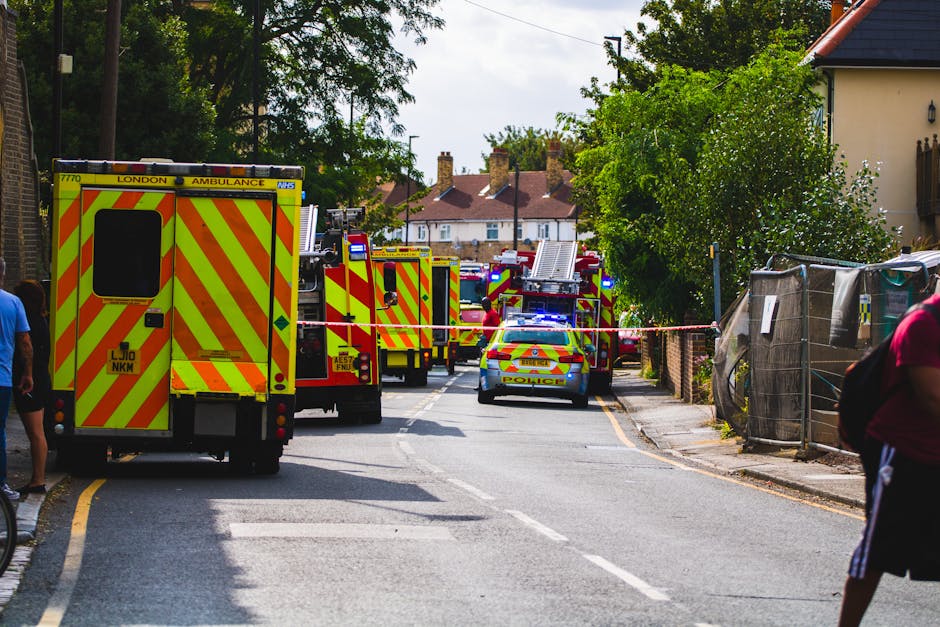
When you need a road closure for Lambeth removals

Moving house or relocating a business in Lambeth can be straightforward on paper, then suddenly messy in real life. A narrow street. Parked cars. A long walk from the front door to the van. Maybe a delivery truck is already blocking the turning point. That is usually when people start asking about when you need a road closure for Lambeth removals and whether it is actually worth the hassle.
The short answer is this: a road closure is not for every move, but it can make a big difference when access is tight, traffic is heavy, or the removal vehicle needs space that simply does not exist on the day. In this guide, we will look at what a road closure is, when it makes sense, how the process usually works, and what you should check before moving day arrives. We will also cover practical alternatives, compliance considerations, and a few real-world scenarios that often catch people out. To be fair, it is one of those things you hope you never need, until you absolutely do.
If you are comparing move options at the same time, it can also help to review removal services, home moves, and office removals so you can match the access plan to the type of move.
Why When you need a road closure for Lambeth removals Matters
Road access is one of the quiet make-or-break issues in removals. If a van cannot stop close enough to the property, the whole day becomes slower, more tiring, and more expensive. Boxes get carried further. Furniture gets moved in smaller loads. The team spends more time dodging traffic and trying not to block neighbours. Nobody enjoys that, especially when there is a sofa balanced on a trolley and rain starting just as you thought you were done.
A road closure matters because it creates a controlled space for loading and unloading. That can reduce delays, improve safety, and lower the risk of damage to belongings or property. In busy parts of Lambeth, or on streets with limited parking, a closure or traffic management arrangement can be the difference between a smooth move and a slightly chaotic one.
It also matters from a neighbour-relations point of view. Moving day already brings noise, foot traffic, and a bit of disruption. If the van is double-parked in a narrow street, tempers can rise quickly. A properly planned closure helps keep things orderly and shows that you have thought ahead rather than hoping the road will somehow clear itself at 8:30 in the morning. That is never a great strategy.
For larger or more complex moves, especially if you are arranging a commercial move or moving heavy items, access planning should be considered alongside handling, packing, and vehicle size. A road closure is just one part of the bigger picture, but it is often a crucial one.
How When you need a road closure for Lambeth removals Works
In practical terms, a road closure for removals is a temporary arrangement that restricts vehicle access on a specific stretch of road for a limited period. The exact process depends on the local authority rules and the street involved, but the aim is similar: give the removal team enough space to work safely and efficiently.
Usually, the move planner starts by assessing the site. Is the property on a main road? Is there loading space nearby? Is the access route one-way or awkwardly narrow? Are there schools, buses, cyclists, or pedestrian flows to think about? These details matter because they determine whether a road closure is sensible or whether a simpler restriction, such as suspended parking or timed loading access, would do the job.
Then comes timing. A closure is typically needed for a short period only, often just long enough to load or unload the heaviest items. You do not want to close a road for longer than necessary. That would be wasteful, and to be honest, a bit irritating for everyone else using the street.
On the day, the crew needs to work around the closure plan precisely. Vehicles should be positioned carefully. Footpaths must remain usable where required. Signs and barriers, if used, need to be clear and visible. In many cases, the best moves happen quietly in the background because the planning has already done the hard work.
If your move involves a larger vehicle, you may also want to compare whether a moving truck or a smaller removal van is more suitable. Sometimes the simplest access solution is not a closure at all, but using a vehicle that can fit the street better in the first place.
Key Benefits and Practical Advantages
The biggest benefit is simple: better access. But there are several other advantages that people sometimes overlook until they are standing in the street wondering why the wardrobe will not fit through the gap.
- Less time spent carrying items: the closer the vehicle can park, the quicker the loading process tends to be.
- Lower risk of damage: shorter carry distances usually mean fewer bumps, knocks, and awkward turns.
- Better safety for the team: controlled loading reduces the chance of accidents near traffic or passing pedestrians.
- Less disruption to the move: fewer interruptions from drivers, neighbours, or blocked access.
- More predictable timings: if access is secured properly, the schedule is easier to keep.
There is also a subtle benefit that people do not always mention: confidence. When the access plan is sorted, everything feels calmer. Boxes get labelled properly. The team knows where to stand. You are not trying to make last-minute decisions while a rain shower hits the pavement and the kettle is still in the old kitchen.
If the move is physically demanding or includes awkward items, a road closure can support services like piano removals or furniture removals, where space and safe handling really do matter.
Who This Is For and When It Makes Sense
Not every household or business needs a road closure. In fact, many do not. But there are clear situations where it starts to make sense.
You may need one if your property is on a busy or narrow road, if the front of the building has limited stopping space, or if the removal lorry would block essential traffic routes. Flats and maisonettes often present this problem because access points can be tucked away, shared, or awkwardly positioned. If that sounds familiar, it may be worth looking at flat removals planning in tandem with access arrangements.
It can also be useful for:
- large family homes with many bulky items
- top-floor moves where carrying distance must be kept short
- office relocations with crates, desks, and IT equipment
- student moves where shared streets and parking pressure are common
- same-day or urgent moves where time is already tight
If you are moving out of a property with ongoing construction, narrow mews access, or residents' permit limitations, road management becomes even more relevant. The same applies if you have several people arriving at once, such as a packing team, removals crew, and a van all needing to work in a small space. It can get crowded quickly.
For quicker, lighter jobs, a service like man and van or man with van may be enough without needing a formal closure. But do not assume. Check the street first.
Step-by-Step Guidance
Here is the practical way to approach it.
- Assess the property access. Look at the street, pavement width, parking availability, turning space, and how far the vehicle would need to carry items.
- List the items being moved. Heavy wardrobes, beds, pianos, large office furniture, and fragile items all affect the plan.
- Decide on the right vehicle size. A smaller van may avoid the need for a closure altogether. A larger truck may need a bigger access solution.
- Check whether parking suspension or loading restrictions are enough. Sometimes a full closure is unnecessary if the access problem is really just parking.
- Plan timing carefully. Early mornings are often better, but that depends on local conditions and the property itself.
- Confirm insurance and safety arrangements. If the move involves public roads, busy pavements, or expensive items, this matters more than people expect.
- Build the closure into your move schedule. Do not leave it until the last few days. That is when stress multiplies.
One thing we see often is people underestimating how long the loading stage will take. A van can look "close enough" from the doorway, but if there are three flights of stairs and a narrow street, that small distance becomes a big effort. Plan for the real carry, not the ideal carry.
If you are still working out the overall size and structure of the move, packing and boxes and packing and unpacking services can make the timing much easier to control.
Expert Tips for Better Results
Good access planning is mostly about thinking one step ahead. A few practical habits make a big difference.
- Walk the route on foot. Stand at the front door and imagine carrying a sofa, not a handbag. It changes your view very quickly.
- Check for school runs, bin days, and delivery windows. These can create hidden congestion even on a quiet-looking street.
- Speak to neighbours early if needed. A heads-up avoids awkward surprises and can keep people onside.
- Keep the loading area clear. Wheelie bins, bikes, and plant pots have a habit of appearing exactly where you need space.
- Use labels and room-by-room packing. It speeds everything up when the team can load in a logical order.
- Have a backup plan. If the closure or access arrangement changes, know where the vehicle can legally stop instead.
Another tip, and this is a small one but important: take pictures of the access point before the move. Not for drama. Just for clarity. If there is ever a question later about what was possible on the day, you have a simple reference.
If you are dealing with specialist items or a mixed move, it can help to review house removals alongside removals more generally, because the access needs often change with the type of property and contents.
Common Mistakes to Avoid
Most problems with road closures do not come from the closure itself. They come from weak planning.
First mistake: assuming a closure is automatically required. Sometimes a smaller vehicle, better timing, or temporary parking control is enough. A closure is a tool, not a default setting.
Second mistake: leaving it too late. Access arrangements can take time, and last-minute changes are where stress lives. Truth be told, this is the one that causes the most headaches.
Third mistake: forgetting about pedestrians and neighbours. A blocked path or unmarked access point can create complaints very quickly.
Fourth mistake: not matching the closure to the job. A small student move and a three-bedroom family house are not the same thing. Nor are they remotely similar, despite what a rough spreadsheet might say on a sleepy Monday morning.
Fifth mistake: ignoring the weather. Wet pavements, poor visibility, and slippery floors make a short carry more difficult than people expect. A move that looked simple at 9am can feel very different by lunch.
If your move is being organised quickly, same day removals may still be possible, but only if the access plan is realistic. Speed helps, but only if the logistics are solid.
Tools, Resources and Recommendations
You do not need fancy tools, but a few basic resources help keep everything tidy.
- Measuring tape: useful for doorways, stair bends, hallways, and vehicle clearance.
- Floor plan or rough sketch: even a hand-drawn layout helps identify bottlenecks.
- Inventory list: essential for knowing which items need priority loading.
- Colour labels or room stickers: these make unloading far smoother.
- Protective materials: blankets, covers, and wrapping reduce the risk of knocks.
For businesses, it is often worth combining this with an office move plan and a realistic equipment list. IT units, filing cabinets, archive boxes, and desks all change the access requirements. If that sounds like your situation, office relocation services can be a more suitable starting point than trying to improvise a general move plan.
It can also help to use storage if the road closure window is short but the property is not ready for everything to go in at once. A short-term split move can reduce pressure on the day. In those cases, storage can be a sensible bridge rather than a headache.
Law, Compliance, Standards and Best Practice
Any move involving road space should be handled with care, and that includes thinking about local rules, safety duties, and the practical impact on other road users. You should always follow the relevant council or highway authority process for the street involved, and you should not assume that one area works exactly like another. Lambeth streets can vary a lot from one block to the next.
From a best-practice point of view, the main principles are simple: keep disruption proportionate, keep people safe, and make sure vehicles do not create unnecessary obstruction. If signage, permissions, or traffic management measures are required, they should be arranged in advance rather than dealt with on the fly.
Safety also matters inside the property. A road closure does not remove the need for lifting care, manual handling awareness, and basic protection for doors, floors, and furniture. That is why it is sensible to check a company's health and safety policy and insurance and safety approach before the move.
It is also wise to read the terms and conditions and understand what is included in the service, especially if access is difficult or the move might need more than one visit. Not glamorous reading, admittedly, but useful.
Options, Methods, or Comparison Table
Not every access problem needs a road closure. Here is a simple comparison of the most common approaches.
| Option | Best for | Pros | Limitations |
|---|---|---|---|
| Full road closure | Tight streets, large moves, heavy loading | Maximum working space, safer loading, less vehicle conflict | More planning, more disruption, usually only justified in specific cases |
| Parking suspension | Most standard household moves | Frees up kerb space without closing the whole road | Still depends on local parking conditions and clear access |
| Timed loading bay use | Urban streets with controlled bays | Simple if available, often enough for lighter moves | May not suit bulky furniture or longer carry distances |
| Smaller vehicle access | Flat moves, student moves, compact loads | Less need for traffic control, easier to park | May require more trips if the load is large |
For smaller loads, a removal van or student removals approach may solve the access issue without any closure at all. For bigger jobs, a fuller traffic plan is often the smarter route. The trick is matching the method to the move, not the other way round.
Case Study or Real-World Example
Imagine a family moving out of a terraced property on a narrow Lambeth street on a Friday morning. There is parking on both sides, a delivery lorry often uses the road, and the front hallway is long enough to make every trip feel like a small expedition. The family has a dining table, several beds, and a few awkward cabinets that will not tilt nicely around the stair corner.
In that situation, a road closure or temporary access restriction may be justified if the team needs uninterrupted loading space. Without it, the van might have to park several houses away, which means longer carry distances, more time on the street, and a greater risk of bumping walls or catching furniture on doorframes. Nobody wants that sound of wood scraping on plaster. You know the one.
Now compare that with a one-bedroom flat move with modest furniture and a short loading window. In that case, the better solution might be a smaller vehicle, careful timing, and a reserved stopping point rather than a full closure. Same borough, very different outcome. That is why blanket answers are not much help.
If the move is business-related, the same logic applies. A small office relocation may only need a single van and controlled access, while a larger one may need a full commercial moves plan with staging, lifts, and temporary road management. One size never quite fits all here.
Practical Checklist
Use this before you commit to a road closure plan.
- Measure the street access and note any pinch points.
- Confirm the size of the vehicle you actually need.
- Check whether the move is better served by parking suspension instead of closure.
- Identify any heavy or fragile items that need special handling.
- Review neighbour impact, especially on busy residential roads.
- Allow enough lead time for permissions or traffic arrangements.
- Check insurance, safety, and service terms.
- Prepare a room-by-room packing system.
- Have an alternative stop point in case access changes on the day.
- Keep the schedule realistic, not optimistic.
That last point sounds obvious, but it is where people trip up most often. The plan should protect the move, not just look tidy on paper.
Conclusion
Knowing when you need a road closure for Lambeth removals is really about reading the street properly. If access is tight, parking is scarce, and the vehicle needs space to load safely, a closure can save time, reduce stress, and prevent a lot of avoidable hassle. If the move is smaller or the street is manageable, a simpler access plan may be enough.
The best results usually come from honest assessment, early planning, and a realistic view of the property, the road, and the items being moved. Nothing fancy. Just good judgement, done early. That is often what turns a chaotic move into a calm one.
If you are planning a move in Lambeth and want to compare the most practical options, take a look at removal services, house removals, and pricing and quotes so you can choose the right setup for your street and your schedule.
Get a free quote today and see how much you can save.
Even a tricky move tends to feel lighter once the access plan is clear.
Frequently Asked Questions
Do I always need a road closure for removals in Lambeth?
No. Many removals can be handled with a standard van, timed loading, or parking suspension. A closure is usually reserved for streets with very limited access, heavy traffic pressure, or larger moves that need uninterrupted space.
What is the difference between a road closure and parking suspension?
A road closure restricts vehicle access on part of the road, while a parking suspension usually prevents parking in a specific area without fully closing the street. In many moves, parking suspension is enough.
How far in advance should I plan access arrangements?
As early as possible. The bigger or more complex the move, the more lead time you should allow. Leaving it to the last minute can limit your options and increase stress on moving day.
Can a small flat move ever need a road closure?
It can, but it is not common. A flat move may need one if the street is particularly narrow, busy, or impossible to access safely with a van and loading equipment.
What kind of moves are most likely to need a closure?
Large house moves, office relocations, and moves involving bulky or heavy items are the most likely candidates. Piano moves and big furniture loads can also trigger access concerns.
Will a road closure make my move faster?
Usually, yes, because the crew can load closer to the property and work with fewer interruptions. But the overall speed still depends on packing, item size, and how well the move has been organised.
What if there is nowhere to park the van legally?
That is exactly the kind of situation where access planning becomes important. You may need a closure, a parking suspension, a smaller vehicle, or a different loading strategy.
Is a road closure safe for pedestrians?
It can be, if it is arranged properly and managed carefully. Footpaths, signage, and safe access routes should always be considered so pedestrians are not put at risk or forced into awkward detours.
Should I tell my neighbours about the move?
Yes, if the move could affect parking, access, or noise. A quick heads-up often avoids complaints and helps people plan around the disruption.
Can storage help if the road closure timing is tight?
Yes. If access is limited or the schedule is split over more than one day, short-term storage can make the move much easier to manage.
What should I check before agreeing to a moving plan?
Check access, vehicle size, timing, insurance, safety measures, and the service terms. If any part of the plan depends on public road space, make sure that aspect is clear before the moving date.
Are road closures more common for business moves than home moves?
Often, yes, because commercial moves may involve more equipment, more people, and stricter timing requirements. But some home moves also need them, especially where the road layout is tight or heavily used.